Deep in the winter, when the wild winds whistle and whisper.
Far in the distance bleak earth met bleary sky, though beforehand
Sunshine had seen the soft, green valley blooming, and kissed her.
We were alone, the moor and I, and the limitless grey sky;
I walked the unmarked path that the dark earth murmured in silence.
Never a soul I saw as dampening grey-tinged mist rolled by,
Going I knew not where with the chilling vagueness of violence.
After hours, it seemed, I found the mists started clearing
And I saw my path led on to the edge of a dark wood.
Sheer black walls of trees stared down, and seemed to be sneering,
Daring me to venture into their dank depths, and I stood.
Long I delayed, unsure, while overhead clouds started breaking;
Still no decision had I on the sharp tug of my waking.
Background
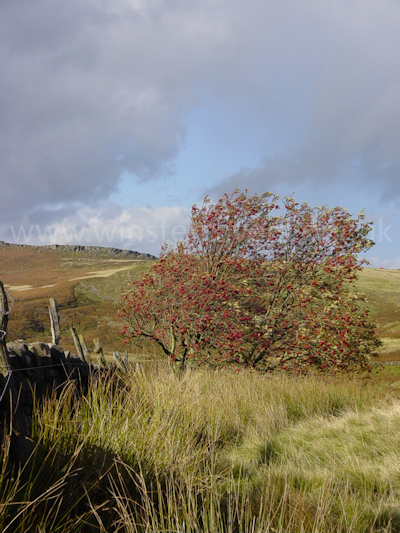
This was my test case for hexameter sonnets, which I came up with while in Cornwall (a daydream, not a night dream). The moors (the proper way to say 'moor' is to rhyme with 'poor', as in very conservative RP and in Northern English accents) in question are the ones near where I live, on the outskirts of Sheffield, just into Derbyshire. They are pretty but definitely not tame - they're the ones Jane Eyre was afraid she'd die on, if you know the book.
Technically
Like I say, this was the first hexameter sonnet I wrote, which I was rather pleased with. I think the metre lends itself quite well to alliteration, perhaps reminiscent of the Old English accent-alliterative metres (which I've played with a bit, and might post if I find a good one) used in things like Beowulf. Looking at these two again, the style feels a little verbose - more in this than in Moonlit, and in my initial writing in hexameter generally. The inversion in the last line ("had I") kind of sums it up - something you just wouldn't say. That's always the danger in forms, generally - you can end up writing something unnatural. Poetic diction is license so far, but I like to keep things clear as much as possible, so people realise that anything else is deliberate - unlike people trying pentameter for the first time after reading too much Shakespeare who end up putting in a lot of "doth"s and "thou"s. (Both of which are fine, of course, provided you mean to do them.)
In case anyone wants to try a hexameter sonnet (email or post in comments, if you're brave), a brief summation of how mine work:
- The metre is stress-based dactylic hexameter (six stressed syllables in a line with one or two unstressed syllables between, and the last two stress groups always Adonic (dáctyl then spóndee, DUM-dee-dee DUM-dum))
- The structure is the same as a Shakespearian sonnet, three quatrains and a volta couplet rhyming ABAB CDCD EFEF GG (with the volta "turning away" or evolving from the rest of the sonnet in subject matter)
- The lines which rhyme according to the rhyme scheme have the last stress group rhyming (all feminine rhymes), and the same scansion (same positioning of unstressed syllables).
Links
Here's some stuff about the accent-alliterative metre, which is another interesting non-iambic form, and which apparently influenced GMH a lot.

No comments:
Post a Comment